
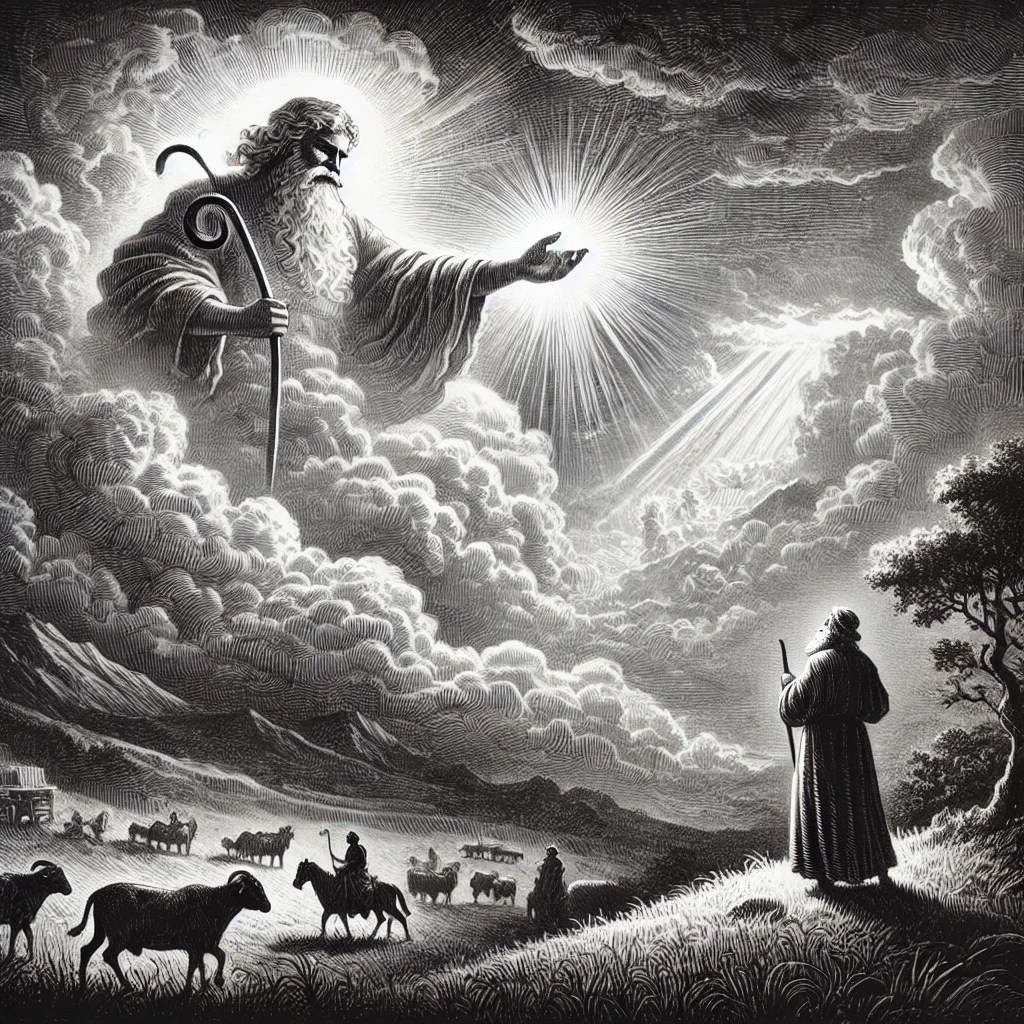
Jesus fulfilled the Old Testament, yet it’s crucial to understand what this fulfillment truly means. His teachings and life revealed profound truths that expanded the understanding of God’s law beyond the legalistic framework of the Old Testament, guiding humanity toward a higher, grace-based relationship with God.
Acts 7:38-43 and Israel’s Worship in the Desert
In Acts 7:38-43, we find a reference to the Israelites’ 40 years in the wilderness, during which they “carried the tent of Molech and the star of their god Rephan.” Even after Moses destroyed the golden calf, the Israelites struggled with idolatrous practices. The passage highlights a period of continuous idolatry, where God “gave them up to worship the host of heaven,” revealing a significant deviation from true worship.
This reference to the “tent of Molech” suggests that the worship practices Israel carried out were not inspired by the divine Father, but by another entity. The prophet Amos echoes this condemnation, stating, “I despise your feasts, and I take no delight in your solemn assemblies” (Amos 5:21-22). These rituals, sacrifices, and practices, God reveals, were not from Him but from a false god, symbolized by Molech and Rephan. The Israelites’ wandering journey became a test, emphasizing the struggle between adhering to divine guidance and succumbing to false gods.
Yahweh’s Role in the Old Testament and the Fulfillment by Jesus
Throughout the Old Testament, Yahweh is depicted as a jealous and demanding deity, sometimes advocating for laws that allowed morally troubling practices, such as severe punishments, slavery, and strict codes of purity and worship. These portrayals contrast sharply with the teachings of Jesus, who emphasized love, forgiveness, and mercy. Jesus often challenged the legalistic practices and severe aspects of the law, illustrating that his understanding of God’s nature diverged from traditional interpretations of Yahweh’s demands.
In Matthew 5:17, Jesus says, “Do not think that I have come to abolish the law or the prophets; I have not come to abolish them but to fulfill them.” His fulfillment of the law was not an endorsement of its harshness, but a transformation of its essence. Jesus moved the focus from adherence to rules toward living a life of grace and compassion, pointing toward a God who seeks relationship rather than mere obedience.
The Apostle Paul reinforces this transition in Galatians 3:13, writing, “Christ redeemed us from the curse of the law by becoming a curse for us, for it is written, ‘Cursed is everyone who is hanged on a tree.’” By taking on the burden of the law, Jesus broke its cycle of punishment and sacrifice, freeing humanity from a legalistic bond and offering a covenant of grace and faith.
Yahweh as the “Adversary” and the Concept of Evil
In the New Testament, Jesus presents God as a Father of love and mercy, quite different from the vengeful and jealous God of the Old Testament. Exodus 34:14 shows Yahweh declaring, “For thou shalt worship no other god: for the Lord, whose name is Jealous, is a jealous God.” This attribute of jealousy is distinct from the portrayal of God in Jesus’ teachings, where God embodies love and forgiveness.
In John 8:42-44, Jesus addresses the Pharisees, saying, “If God were your Father, you would love me…You are of your father the devil, and your will is to do your father’s desires.” Here, Jesus highlights the hypocrisy and legalism of the Pharisees, implying that the harsh, accusatory spirit they follow is aligned with the “adversary” rather than with God’s true nature. The term “devil” in Greek means “accuser” or “adversary,” aligning with the role Yahweh often takes in the Old Testament as a strict, judging force.
Paul adds further clarity in 2 Corinthians 11:14: “And no wonder, for Satan himself masquerades as an angel of light.” This verse reveals the deceptive nature of Satan, who appears righteous yet leads people into bondage. Jesus stands as the contrast to this, offering liberation and inviting people into a relationship with the true God of love.
The Transition from the Old to the New Covenant
The Old Testament laws reflect a system rooted in control, with restrictions and penalties focused on external behaviors. Jesus, however, introduced a covenant of internal transformation based on faith, grace, and love. This change is pivotal in understanding the new relationship God offers through Christ, as Paul explains in Galatians 5:1: “It is for freedom that Christ has set us free; stand firm, then, and do not let yourselves be burdened again by a yoke of slavery.”
This “yoke of slavery” refers to the old law’s burdensome and punitive nature. Jesus’s sacrifice and resurrection established a new covenant that transcended legalism. His ministry emphasized that true worship involves love and mercy, which he exemplified in his interactions, even toward those considered “sinners” by the law. Jesus’s ultimate act of love on the cross fulfilled the prophecies of the Old Testament and replaced a system of vengeance with a foundation of grace.
Yahweh, Satan, and the Rise of Modern Satanism
Today, as more people question traditional portrayals of God as a vengeful being, there is a rising interest in modern Satanism, which sometimes appears to embrace qualities mistakenly assigned to God in the Old Testament. For those who identify Yahweh’s harsher traits as aligned with the adversary, this confusion can lead to disillusionment with traditional religious frameworks and an attraction to self-determination over rigid obedience.
In 2 Corinthians 4:4, Paul speaks to this deception, saying, “The god of this world has blinded the minds of unbelievers, to keep them from seeing the light of the gospel of the glory of Christ.” This “god of this world” symbolizes the force that obscures divine truth, leading many astray. It also reveals the importance of distinguishing between the Old Testament’s legalism and the New Testament’s emphasis on love, pointing us to the true nature of God as revealed through Jesus.
Embracing the True God of Love
To counter the misunderstandings that give rise to Satanism and other distortions, it is essential to emphasize the New Testament’s portrayal of God as a being of love and forgiveness. 1 John 4:8 encapsulates this perfectly: “Whoever does not love does not know God, because God is love.” Jesus’s message invites us to move away from a perception of God as a vengeful judge and embrace God as a source of compassion and unity.
Understanding the nature of Yahweh as a possible representation of the adversary or accuser helps clarify the distinction between the carnal world’s laws and the grace offered through Christ. This awareness does not diminish the historical significance of the Old Testament but instead highlights its role in preparing humanity for a higher understanding through Jesus.
The Fulfillment of the Old Testament Through Jesus’ Sacrifice
Isaiah 53:5 prophesies the coming of a savior: “But he was wounded for our transgressions, he was bruised for our iniquities: the chastisement of our peace was upon him; and with his stripes we are healed.” Jesus’s crucifixion marks the end of the Old Covenant and the birth of a New Covenant, based not on strict adherence to laws but on the transformative power of love and forgiveness.
In his resurrection, Jesus overcame the legalistic, punitive system of the Old Testament, inviting humanity to a new understanding of God as a Father of compassion. His teachings dismantle the concept of a vengeful God, urging us to embrace our true divine nature and embody love. As Jesus said, “A new commandment I give to you, that you love one another: just as I have loved you, you also are to love one another” (John 13:34).
Conclusion: From Law to Love
The transformation from the Old Testament’s legalism to the New Testament’s grace represents a spiritual evolution, moving humanity from fear and control to freedom and divine love. Jesus’s teachings reveal God as a Father of mercy, inviting all to shed the bondage of outdated laws and embrace a path of compassion, forgiveness, and grace.
Recognizing the difference between the Old Testament’s portrayal of God and Jesus’s message of love empowers us to align with our divine essence. Embracing this understanding deepens our connection with the true God of love, fostering a world rooted in compassion, unity, and spiritual freedom.
 Life Tronic Cell