
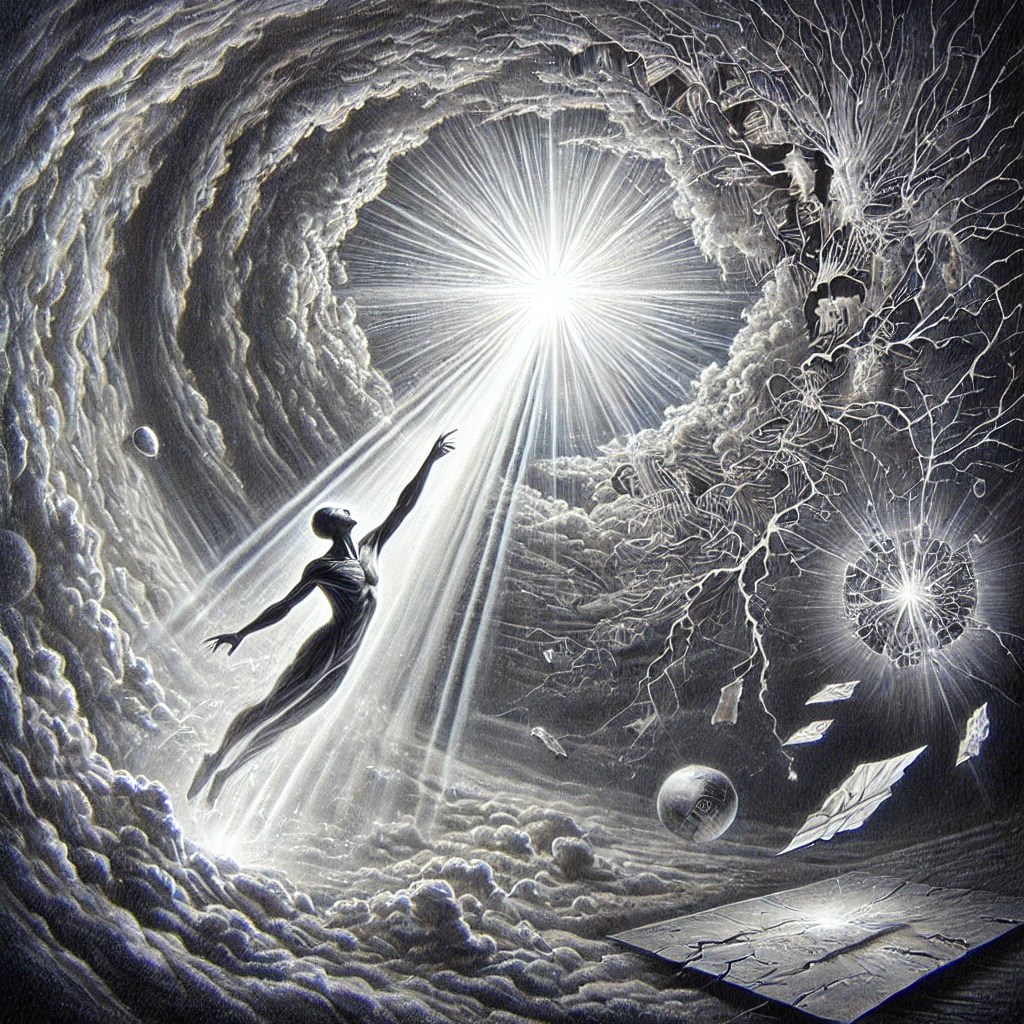
In our spiritual journey, we are often reminded of the difficulty and frustration that accompanies the process of reflecting on, relinquishing, and accepting our true reality. This journey is a call to transcend our material existence and reconnect with the divine essence within us. It is a path filled with fleeting glimpses of profound insight and moments of intense spiritual clarity, yet these experiences are often elusive. Let us explore this dynamic tension through reflections rooted in both New Testament teachings and Gnostic wisdom.
The Nature of the Fleeting Light
Spiritual insight often manifests as ephemeral moments of clarity, a radiant light that illuminates our true essence. However, as quickly as this light appears, it seems to vanish, leaving us yearning for its return. This transient nature of divine experience is deeply frustrating, as our attention inevitably returns to the physical and material—our surroundings, obligations, and distractions.
As described in the Gospel of Thomas, a foundational Gnostic text:
“The Kingdom of God is spread out upon the earth, and people do not see it.” (Logion 113)
The light is always present, but our focus on material existence blinds us to its enduring presence. Each time we return to meditation, prayer, or spiritual practice, it becomes easier to reconnect with this light. The process of returning, of striving again and again to dwell in divine presence, builds spiritual momentum and brings us closer to God.
Why the Light Must Fade
If spiritual illumination were permanent and unchanging, we might stagnate in our growth. The fading of divine insight compels us to work anew, to reaffirm our commitment to the spiritual path. Jesus himself modeled this rhythm of withdrawal and return. In the Gospels, we see him repeatedly seeking solitude to pray:
“But Jesus often withdrew to lonely places and prayed.” (Luke 5:16)
Jesus understood that communion with God requires intentional effort and space away from distractions. It is in this sacred solitude that we can recalibrate our focus, silence the “monkey brain,” and realign ourselves with the divine.
The Kingdom Within and the Barriers Without
Jesus declared, “The kingdom of God is within you” (Luke 17:21). This profound truth reminds us that divine connection is not found in external achievements or possessions but in the quiet depths of our being. Yet, our fixation on material desires creates a chasm between us and God. We tell ourselves, “I need a better car, a bigger house, or the latest phone,” placing worldly concerns above our spiritual calling.
This distraction is compounded by habitual patterns. Our minds, accustomed to the rhythms of daily life, prioritize fleeting comforts over eternal truths. We eat, watch, or scroll to quench our anxieties, further entrenching ourselves in the material. The Gnostic perspective emphasizes the need to strip away these layers of illusion:
“When you make the two into one, and when you make the inner like the outer and the outer like the inner…then you will enter the kingdom.” (Gospel of Thomas, Logion 22)
To enter the kingdom, we must integrate our spiritual essence with our earthly lives, letting go of false divisions and worldly distractions.
Cultivating Good Habits: The Path to Oneness with God
Transformation begins with mindfulness and intentional living. Each evening, take stock of your day. Reflect on how you spent your time, noting moments when you faltered or allowed distractions to pull you away from God. This practice of self-examination aligns with Paul’s counsel in the New Testament:
“Examine yourselves to see whether you are in the faith; test yourselves.” (2 Corinthians 13:5)
By acknowledging where we can improve, we create opportunities to replace unhelpful habits with practices that bring us closer to God. For instance, instead of turning to television or social media for comfort, consider reading a spiritually enriching book or spending time in silent prayer.
Whittling Away the Barriers to God
The process of spiritual growth is slow and deliberate, often described as “whittling away” the distractions and attachments that separate us from God. This gradual journey requires patience and persistence. Gnostic wisdom teaches that enlightenment is not attained overnight but through years of consistent effort. The Gospel of Philip offers this perspective:
“It is within this truth that we find light. If we do not bring it, it will not be brought.”
Our task is to bring the light within ourselves into focus, one step at a time. This involves daily practices of prayer, meditation, and self-discipline. By affirming each night, “I am seeking unity with God and my soul,” we align ourselves with divine purpose and strengthen our resolve.
The Role of Rest and Solitude
In our restless pursuit of material satisfaction, we often neglect the restorative power of rest. Sometimes, the most spiritual thing we can do is simply to pause. A short nap or moment of stillness can help us reset, clearing away the mental clutter that blocks our connection to the divine. As Psalm 46:10 reminds us:
“Be still, and know that I am God.”
Resting in stillness is not a sign of passivity but an active surrender to the presence of God. It is in these moments of quiet that the inner kingdom becomes most accessible.
Perseverance on the Spiritual Path
The journey back to our true nature requires enduring effort and commitment. It is said that enlightenment can take 12 years of persistent practice. While this may seem daunting, each small step brings us closer to the brilliance of divine light. The Apostle Paul’s words in Galatians serve as encouragement:
“Let us not grow weary in doing good, for at the proper time we will reap a harvest if we do not give up.” (Galatians 6:9)
Every moment of prayer, every effort to transcend distraction, builds upon the last, creating a momentum that propels us toward unity with God.
Conclusion: Returning to the Kingdom Within
In this life, we are called to reflect, relinquish, and embrace the reality of our divine nature. Though the journey is fraught with challenges, the light within us never fades—it grows more brilliant with every step we take toward God. By cultivating good habits, seeking solitude, and whittling away the distractions of the material world, we can rediscover the kingdom within and draw closer to our ultimate purpose: oneness with the divine.
As Jesus taught, the path is not easy, but it is deeply rewarding:
“Enter through the narrow gate. For wide is the gate and broad is the road that leads to destruction, and many enter through it. But small is the gate and narrow the road that leads to life, and only a few find it.” (Matthew 7:13-14)
May we strive to walk the narrow path, illuminated by the eternal light within.
 Life Tronic Cell