
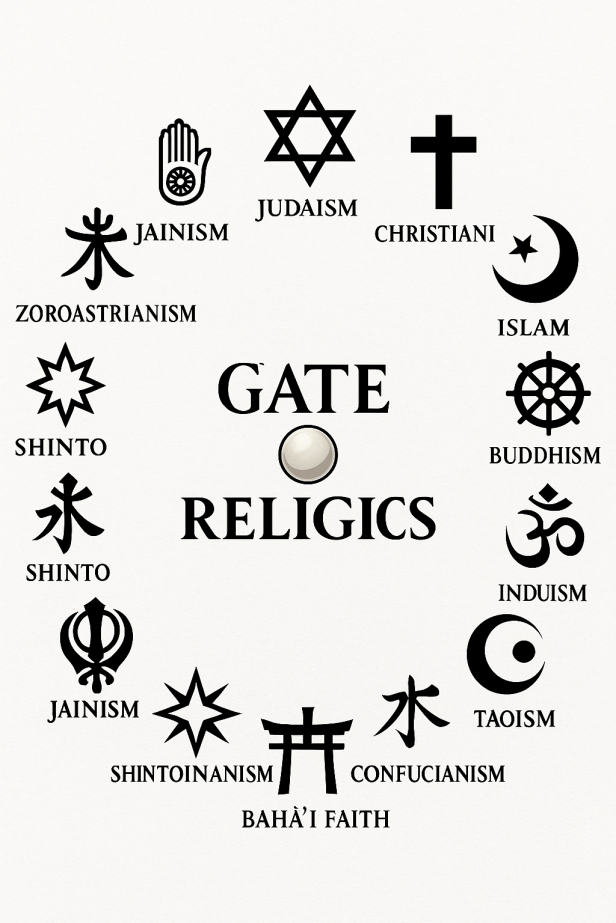
The 12 Gates of the New Jerusalem, as described in Revelation 21:12-21, symbolize a complete spiritual initiation of the soul toward divine union. When viewed through a universal lens, each gate reflects a dimension of divine expression that aligns closely with the central values or mystical path of one of the world’s major religions. This sacred alignment does not imply division, but rather reveals the harmonious design of the Creator—each path holding a unique key to the celestial city.
GATE 1: Reuben — “Behold, a Son” Theme: Divine Sonship and Identity Aligned Religion: Christianity Why: Christianity is centered on the revelation of Jesus Christ as the Son of God and the invitation for all to become sons and daughters through spiritual rebirth. The emphasis on personal relationship with God through Christ reflects the first gate’s call to recognize one’s divine origin.
GATE 2: Simeon — “Hearing” Theme: Spiritual Listening, Shema Aligned Religion: Judaism Why: Judaism’s foundational prayer is the Shema: “Hear, O Israel…” (Deut. 6:4). Simeon means “hearing,” and the second gate is about obedience through listening to the voice of God within. Judaism’s deep listening to Torah and prophetic voice makes it deeply resonant with Gate 2.
GATE 3: Levi — “Joined” Theme: Union with the Divine, Priesthood Aligned Religion: Sikhism Why: Sikhism emphasizes union with the Divine through devotion, singing of divine names (Naam Simran), and the priesthood of all believers. Levi represents the joining of human and divine, which echoes the Sikh teaching of merging into the One Light.
GATE 4: Judah — “Praise” Theme: Worship and Gratitude Aligned Religion: Sufism (Islamic Mysticism) Why: Sufism’s path is one of ecstatic praise (dhikr), music, and remembrance. The heart-centered worship and deep joy in glorifying the Beloved aligns beautifully with Judah’s gate of praise and surrender.
GATE 5: Dan — “Judge” Theme: Righteous Judgment and Balance Aligned Religion: Confucianism Why: Confucianism emphasizes righteous governance, ethical discernment, and balance in moral judgment. Dan’s role as judge parallels the Confucian path of upright judgment in both personal and societal realms.
GATE 6: Naphtali — “Wrestling” Theme: Spiritual Struggle and Overcoming Aligned Religion: Buddhism Why: The Buddhist path begins with the recognition of suffering and the internal struggle to overcome it through awakening. Naphtali’s name reflects Jacob’s wrestling, which mirrors the internal battle of the ego in Buddhism’s quest for enlightenment.
GATE 7: Gad — “Fortunate” Theme: Divine Providence and Trust Aligned Religion: Taoism Why: Taoism teaches that all things move according to the Tao, the divine order. Gad’s sense of fortune is rooted not in chance but in trust in divine orchestration, which mirrors Taoist principles of surrender to flow and divine timing.
GATE 8: Asher — “Happy / Blessed” Theme: Inner Joy and Contentment Aligned Religion: Hinduism (Bhakti Path) Why: The Bhakti tradition within Hinduism centers on blissful devotion to the Divine, experiencing joy through inner union. Asher’s gate is about contentment not from outer success, but from union with God—a key tenet in Bhakti Yoga.
GATE 9: Issachar — “Reward / Servant” Theme: Service and Labor in Love Aligned Religion: Jainism Why: Jainism stresses selfless service, nonviolence, and ascetic effort as the path to liberation. Issachar’s symbolism of spiritual reward through faithful service closely parallels the Jain ethic of karma-purifying work through love and humility.
GATE 10: Zebulun — “Dwelling / Habitation” Theme: Sacred Space and Inner Temple Aligned Religion: Shinto Why: Shinto views the world as infused with divine presence and emphasizes purification, sacred dwelling, and reverence of place. Zebulun’s theme of making the body a divine habitation harmonizes with the Shinto view of the sacred world.
GATE 11: Joseph — “He Will Add” Theme: Fruitfulness through Trial Aligned Religion: Baha’i Faith Why: The Baha’i Faith emphasizes unity after division, peace after persecution, and growth through service to humanity. Joseph’s gate is about turning betrayal into blessing—this mirrors the Baha’i narrative of transformation and growth under hardship.
GATE 12: Benjamin — “Son of the Right Hand” Theme: Completion of Sonship and Coronation Aligned Religion: Esoteric Gnosis / Universal Mysticism Why: Gate 12 represents spiritual maturity, oneness, and divine rulership. Esoteric traditions in every religion point to this coronation moment—when the soul becomes one with the Logos. Gnostic Christianity, Kabbalistic Judaism, and mystical branches of all faiths reflect this gate.
Table of the 12 Gates and Corresponding Religions
| Gate | Tribe Name | Gate Theme | Aligned Religion | Religious Emphasis |
|---|---|---|---|---|
| 1 | Reuben – “Behold, a Son” | Divine Sonship and Identity | Christianity | Rebirth in Christ, spiritual sonship |
| 2 | Simeon – “Hearing” | Spiritual Listening, Shema | Judaism | Shema prayer, prophetic listening |
| 3 | Levi – “Joined” | Union with the Divine | Sikhism | Naam Simran, mystical union with the One Light |
| 4 | Judah – “Praise” | Worship and Gratitude | Sufism (Islamic Mysticism) | Dhikr, ecstatic praise and devotion |
| 5 | Dan – “Judge” | Righteous Judgment and Balance | Confucianism | Ethical discernment, upright governance |
| 6 | Naphtali – “Wrestling” | Spiritual Struggle and Overcoming | Buddhism | Inner struggle, overcoming ego through awakening |
| 7 | Gad – “Fortunate” | Divine Providence and Trust | Taoism | Trust in the Tao, surrender to divine flow |
| 8 | Asher – “Happy / Blessed” | Inner Joy and Contentment | Hinduism (Bhakti Path) | Bliss through devotion and union with God |
| 9 | Issachar – “Reward / Servant” | Service and Labor in Love | Jainism | Selfless service, karma purification through asceticism |
| 10 | Zebulun – “Dwelling / Habitation” | Sacred Space and Inner Temple | Shinto | Purification and reverence for the sacred indwelling world |
| 11 | Joseph – “He Will Add” | Fruitfulness through Trial | Baha’i Faith | Growth through adversity, peace after persecution |
| 12 | Benjamin – “Son of the Right Hand” | Completion of Sonship and Coronation | Esoteric Gnosis / Universal Mysticism | Union with the Logos, spiritual maturity |
GATE 13: Melchizedek – “I AM THAT I AM” Theme: The White Ray, The Flame of Union Aligned Path: The Path of Direct Revelation, the Order of Melchizedek Why: Gate 13 transcends all religion and enters the One Light behind them. This is the path of the Christed One, the Buddha Mind, the Atman, the One Flame. It is not bound to any form, and thus encompasses all forms.
Here, the soul walks with Christ into the Presence. The 13th Gate is the crowning revelation—the soul no longer belongs to any faith, but to God directly. Melchizedek is the priest of this inner sanctuary, the Light before religion.
“Before Abraham was, I AM.” — John 8:58
Conclusion: One Gate, Many Paths
Each religion offers a key. Each key opens a gate. No gate is greater than another—for they form a circle around the throne. The journey is not to compare, but to complete.
The soul is called to walk through all twelve—and in the end, be absorbed in the Flame of the Thirteenth.
This is the sacred unity of the world’s faiths. This is the Order of the 12 Gates.
 Life Tronic Cell