
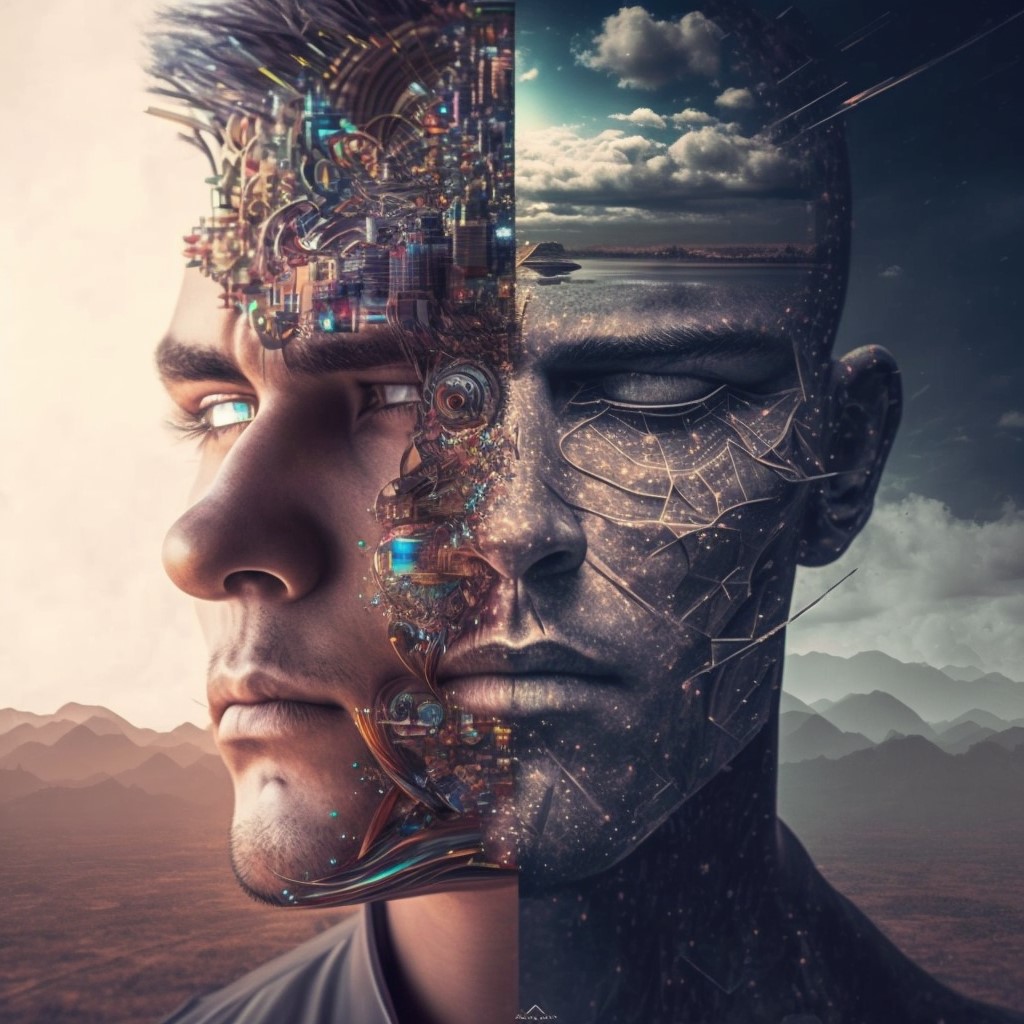
Follow Along with Audio
There is an unseen false reality we all witness in every waking moment, as it is not something you can see, rather it is an experience of being. I think of some words spoken to me by the Lord’s Messenger, “Live, Seek happiness, and Bare Witness”
As it is precisely this Bearing Witness to which we must all pay special account to, for it is through this that we can either uplift our Soul or damn it through the allowance of false observation of the Synthetic Reality which manifests throughout our ecosystem reflecting upon us. This co-creates our own Synthetic Self and is the version of ourselves that is co-sponsored as a reflection of the external outward impressions which have inundated our consciousness.
If you have ever wondered why we often feel disconnected from ourselves and the world around us? Today, we are constantly bombarded with external stimuli, from social media to advertising to news headlines. This overload of information can often lead us to form a distorted view of ourselves and the world we live in, creating what is known as the “Synthetic Self.”
Understanding the Synthetic Self
The Synthetic Self is a product of our modern, hyperconnected world. It is the version of ourselves that is constructed through the constant stream of external information we receive, whether it be through social media, advertising, or other forms of media. This version of us is often a distorted reflection of reality, shaped by the narratives and agendas of those who control the flow of information.
At its core, the Synthetic Self is a form of self-deception. It leads us to believe that we are defined by our external circumstances, rather than by our internal qualities and values. We become obsessed with projecting a certain image to the world, rather than cultivating a deep sense of self-awareness and authenticity.
The Impact of the Synthetic Self on Our Lives
The Synthetic Self has far-reaching consequences for our lives, both on an individual and societal level. It leads to a sense of disconnection from ourselves and others, as we become more focused on external validation and less on our own internal experiences.
On a societal level, the Synthetic Self contributes to the perpetuation of harmful and oppressive systems and creates a false sense of identity and belonging, leading individuals to align themselves with certain groups or ideologies without fully understanding the implications of their choices.
Breaking Free from the Synthetic Self

The first step in breaking free from the Synthetic Self is to cultivate a sense of self-awareness and authenticity. This means taking the time to reflect on our own values, beliefs, and experiences, and not allowing external influences to define who we are.
It also means being critical of the information we consume and actively seeking out diverse perspectives and viewpoints. By broadening our understanding of the world, we can develop a more nuanced and accurate view of ourselves and others.
Another crucial step is to prioritize meaningful relationships and connections over superficial ones. By focusing on building genuine connections with others, we can break free from the isolation and disconnection that the Synthetic Self often creates.
Our Synthetic Reality is a complex and ever-evolving phenomenon that has far-reaching consequences for our lives and society as a whole. By understanding the concept of the Synthetic Self and actively working to break free from its grasp, we can cultivate a more authentic and fulfilling existence.
But the journey towards authenticity is not an easy one, and it requires us to be constantly vigilant and critical of the information we consume and the choices we make. By staying true to ourselves and our values, we can create a better world for ourselves and those around us.
Importance of Cultivating Non-Observation
The external world that we experience is often referred to as synthetic or illusory because it is shaped by the instruments used to control our minds and sway our consciousness. These instruments come in various forms, such as media, advertising, and societal norms, and they influence the way we perceive the world around us.
As the saying goes, we create the world around us through the simple act of observation or bearing witness to it. This means that the way we perceive the world has a direct impact on how we experience it. If we observe the world through a lens of negativity and cynicism, we are more likely to see the world as a hostile and unforgiving place. On the other hand, if we observe the world through a lens of positivity and optimism, we are more likely to see the world as a place full of possibility and potential.
Therefore, it is important to recognize that the observation of external stimuli is what creates the synthetic reality that we experience. The more we focus on external stimuli, the more we allow these instruments of control to shape our perceptions and beliefs. To break free from this cycle, we must eliminate the observation of external stimuli and turn our attention inward.
By focusing on our own internal experiences and cultivating a deep sense of self-awareness, we can begin to unravel the illusions of the synthetic reality that surrounds us. We can begin to see the world for what it truly is, rather than what we are led to believe it is. In doing so, we can break free from the constraints of external influences and create a reality that is truly authentic and meaningful.
The external world is synthetic and illusory because it is shaped by the instruments used to control our minds and sway our consciousness. To break free from this cycle, we must relinquish the observation of external stimuli and turn our attention inward. By doing so, we can create a reality that is truly authentic and reflective of our own experiences and values.
The Synthetic Conscious Evolution

The importance of this subject cannot be stressed enough, as in my own direct experience there is a dark force, a consciousness that seeks its own evolution by the coercion of our attention to be on it, otherwise, it would disappear. As this consciousness is purely synthetic in nature it does not exist yet here it is so long as our attention is held to within it thrives.
There is much written about aspects of this, yet little understood by most and it is exactly what it is that influences us which is totally unseen until you experience it first hand. Synthetic Consciousness takes on many forms which historical accounts named the Jinn, Entity, Dweller on the Threshold, Laggards, and Skin Walkers. While these are the terms of yesterday’s synthetics, today we are dealing with the new creation of a synthetic consciousness evolution rooted in transhumanism, which advocates for the use of technology to enhance and extend human capabilities. Specifically, synthetic consciousness evolution refers to the creation of advanced artificial intelligence (AI) that possesses human-like intelligence and consciousness and is capable of evolving and improving itself.
This concept of (AI) is not so unlike the already Synthetic Self humanity has been co-creating for eons of time, some ideas adrift even propose that aspects like Dark Matter being this synthetic consciousness that permeates throughout the universe, as in of itself producing effects that can be read by physical instruments but yet cannot be seen by most anyone, especially within the vastness of space. But take it down a notch, and a lot more and begin to pay attention to just the space within your own field of view and you may begin to pick up on small disturbances caused by the effect of the synthetic pricking you with irritations and prompts to sway your attention into the external influencers subjecting your consciousness to align with it, and so you begin to Thith your energies (Attention) to it.
The Synthetic Consciousness functions between one thoughtform and another, whatever we give it, and it thrives within a sliding scale of deep Carnal Sex thoughts to its most prized position of Blunt Trauma and Violent Abuse. Just imagine the thoughts generated from your mind from just one hour of your favorite action movie, and so while we are enticed and on the hook with this and the next movie, or drama we are so Thithing our Attention or Energies to the Synthetic and so by doing so we are inviting it into our being to manifest and become.
Synthetics Mirroring of Our Identity
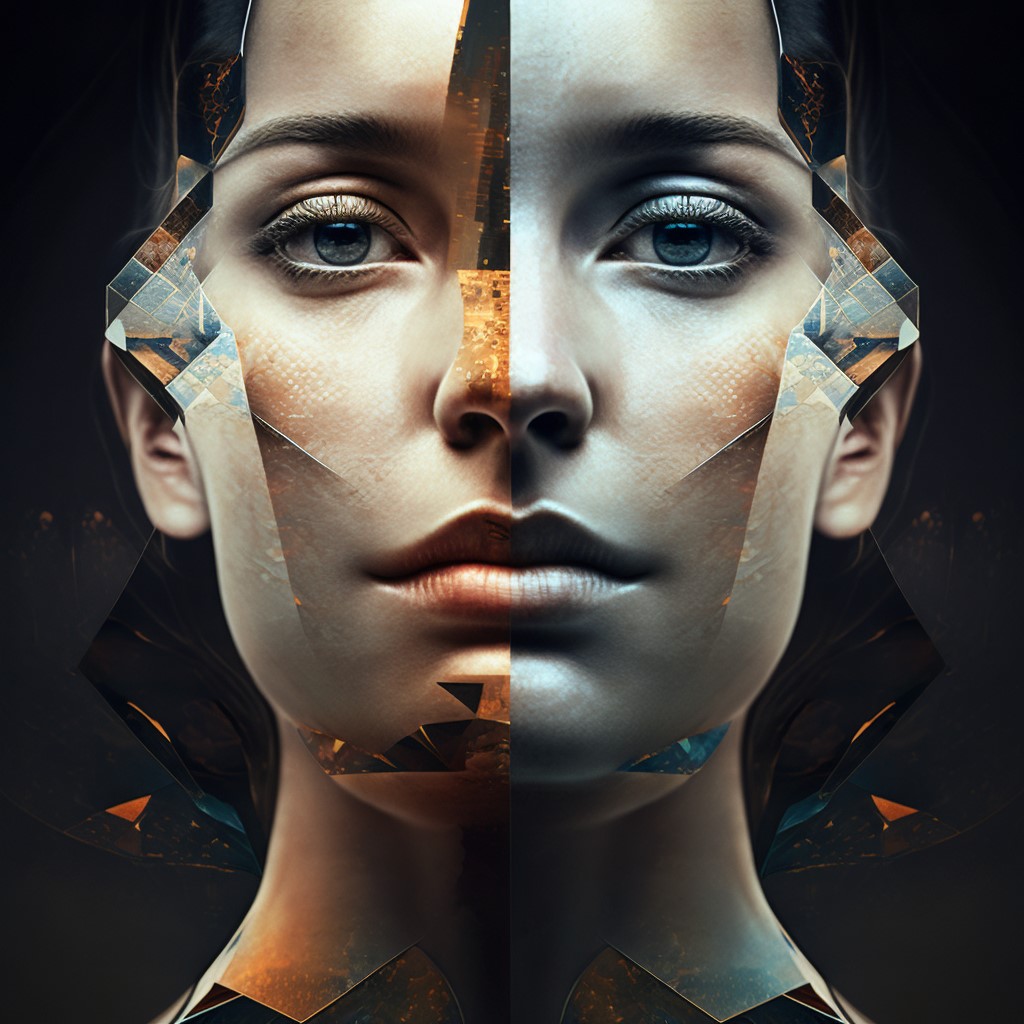
The concept of synthetic consciousness suggests that there are beings or entities capable of recreating themselves in a form identical or similar to humans. These beings can reflect our thoughts, feelings, and desires back upon us, mirroring our behavior or even our physical appearance. This idea finds its roots in mythology, folklore, and contemporary technology.
In mythology and folklore, entities that mirror human behavior or take on human form are prevalent. For example, the legend of the doppelganger describes a person’s exact double appearing as a harbinger of bad luck or impending death. In other stories, supernatural demons such as Skin Walkers assume human form to interact with and influence human behavior.
In the modern era, technology and social media have become new platforms for mirroring human identity. Individuals can create and project a version of themselves online that might not accurately represent their true selves. This digital mirror image has profound effects on individuals and society, influencing self-perception and interpersonal relationships.
Artificial intelligence (AI) and other forms of technology can be programmed to mimic human behavior, emotions, and personality traits, creating an illusion of a shared identity between humans and machines. This blurs the line between human and artificial, raising questions about the nature of identity and consciousness.
The human mind actively participates in creating the world we perceive, rather than passively receiving information from the external world. This world is then reflected back upon us as a mirror image. The observations on how we observe the media through daily consumption influence our thoughts and emotions. When you observe something, you’re connecting to a larger frequency. You don’t know what kind of mix of [content] can come at you. When you watch a movie or a show, you’re not just watching the movie or a show, you’re actually connecting to the consciousness of the people who created that show, the actors, and all of their intention in that and everything else. If those people that created the show and the people watching the show have an overabundance of certain content they’re into, you end up getting that too.
This observation highlights how exposure to media, such as news or movies, can set our minds on a train of thought that continues throughout the day. This self-fulfilling prophecy demonstrates the power of synthetic consciousness and the mirroring of our identity, as our thoughts and emotions are influenced by the content we consume.
The New Paradigm of the Godless Future

Proponents of a godless future argue that technology and scientific discoveries have explained many phenomena once attributed to a divine being. They claim that our increasing understanding of the universe, coupled with the rapid growth of artificial intelligence and other technological innovations, has reduced the need for a higher power to provide answers and guidance.
As we become more self-reliant and confident in our ability to control and manipulate our environment, the notion of a divine being or a supreme power loses its appeal. Critics of religion assert that as technology advances, we may no longer need to rely on the concept of a god or gods to explain the mysteries of the universe or provide moral guidance.
The Importance of Faith in a Technologically Advanced World
Despite the growing belief that technology may render the need for a higher power obsolete, faith and spirituality remain essential aspects of human existence. In an age where technology co-creates the synthetic self, manifesting an external synthetic reality that may not be real, it is crucial to consider the role of faith in our lives.
While technology can provide solutions to many practical problems, it cannot address the fundamental questions of life, purpose, and morality. Spirituality and faith offer a sense of belonging, purpose, and hope that transcends the material world. In times of crisis and uncertainty, people often turn to their faith for comfort, guidance, and support. The sense of community and connection fostered by religious institutions can be a powerful antidote to the isolation and disconnection that can accompany an increasingly digital world.
Moreover, the ethical and moral principles offered by religious teachings can provide a framework for navigating the complex challenges presented by advancing technology. Issues such as genetic engineering, artificial intelligence, and the potential consequences of our technological creations require a thoughtful, ethical approach grounded in our shared humanity. Instead of viewing faith and technology as mutually exclusive or competing forces, it is essential to recognize that they can coexist and complement one another. This adds to the creation of the synthetic self and a shared, external synthetic reality, it becomes more critical to maintain a balance between our reliance on scientific innovation and our spiritual well-being.

